Sunday roast, upgraded: why your beef, lamb or chicken deserves a break from Rioja
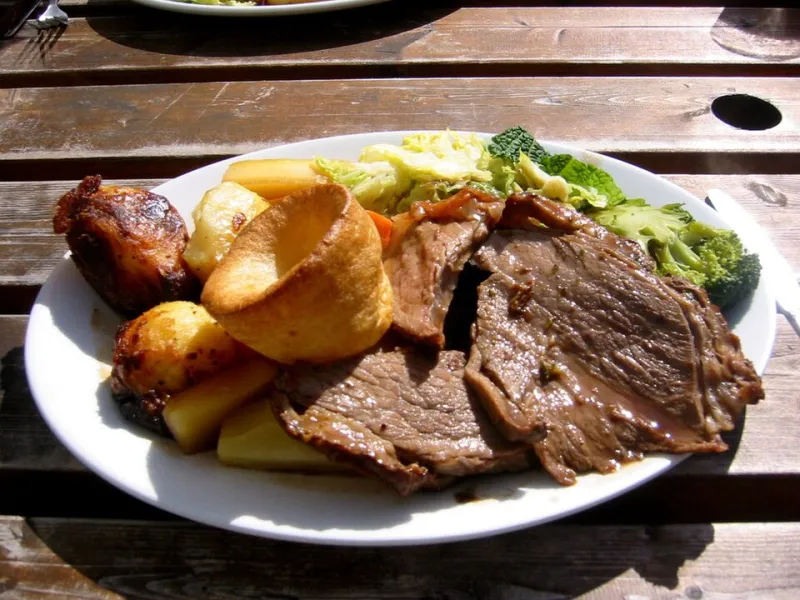
Photo: Jeremy Keith (Flickr user "adactio"), CC BY 2.0, via Wikimedia Commons
Rioja has had a very good run. So has Malbec. Both are reliable, widely available and easy to like, which is exactly why they have become the default answer to the question: what shall we open with Sunday lunch? But defaults are boring, and in 2026 there is no good reason for a roast chicken, a leg of lamb and a slab of beef to all end up with the same bottle. The roast deserves better. Not necessarily something obscure or expensive — just something chosen for the food on the plate, rather than the label everyone recognises.
The default bottle problem
Rioja and Malbec are not bad wines. A traditional Rioja with lamb can be lovely, and a bright Malbec with beef is hardly a crime. The problem is that they are often chosen by habit rather than by match. Roast chicken with a heavily oaked Rioja can taste bitter; roast beef with a soft, jammy Malbec can feel flabby. Sunday lunch is not a restaurant tasting menu, but it is still a meal with gravy, roast potatoes, stuffing, horseradish, mint sauce and all the trimmings. Those flavours matter.
Roast chicken: English Pinot Noir
English Pinot Noir has improved enormously in the past decade, and the best bottles from Kent, Sussex and Hampshire are no longer novelties. Expect red cherry, cranberry, a little earthy mushroom and fine, gentle tannins. The acidity is fresh enough to cut through roast chicken and stuffing without overwhelming the meat. Serve it slightly cool — around 14C — and do not be afraid to put it in the fridge for 15 minutes before lunch. Price band: £18-£30. If you want a white alternative, a dry English still Chardonnay or a Loire Sauvignon Blanc will also work.
Roast lamb: Sicilian Nero d’Avola
Nero d’Avola is the grape to reach for when you want Malbec’s dark fruit but more savoury interest. From Sicily, it gives black plum, bramble, dried herbs and a lick of liquorice, with warm tannins that love rosemary, garlic and lamb fat. It is not a delicate wine, but it is not a blockbuster either. Look for bottles from Noto or Vittoria, or a Cerasuolo di Vittoria if you want something lighter and more floral. Price band: £9-£16 for everyday bottles; £15-£22 for a step up. Serve at 16-17C.
Roast beef: Loire Cabernet Franc
Cabernet Franc from Chinon, Bourgueil or Saumur-Champigny is the roast beef answer you did not know you needed. Expect raspberry, red plum, violets, graphite and a green-peppery edge that sounds odd on paper but works beautifully with beef and horseradish. The tannins are firm but fine, and the acidity keeps the whole plate lifted. It is less powerful than a Bordeaux blend, which is the point: you want to taste the beef, not fight the wine. Price band: £12-£25. Decant for 30 minutes if it is young.
One bottle for the whole table
If you are cooking for a crowd and cannot open three different bottles, go for a cru Beaujolais from Morgon or Fleurie. It has enough fruit for lamb, enough acidity for chicken and enough charm for beef, especially if you serve it cool. Price band: £12-£20. It is not a compromise; it is a sensible middle ground.
How to buy and serve
UK independents and online merchants are the best places to find these wines, and many now offer mixed cases or single-bottle delivery. Use the price bands above as a guide, but remember that a £12 wine from a good producer will often beat a £20 wine from a famous name. Serve light reds cool, not at central-heating temperature. And if you are spending £25 or more, ask the merchant for advice — good wine shops love a Sunday lunch question.
The Sunday roast is one of the great British meals. It deserves a wine that was chosen for it, not one that was chosen by habit. Put down the Rioja for a week. Try an English Pinot Noir with the chicken, a Nero d’Avola with the lamb and a Loire Cabernet Franc with the beef. You can always go back to the default next Sunday.