Batter, salt and a light chill: the chippy-tea wine matches worth trying
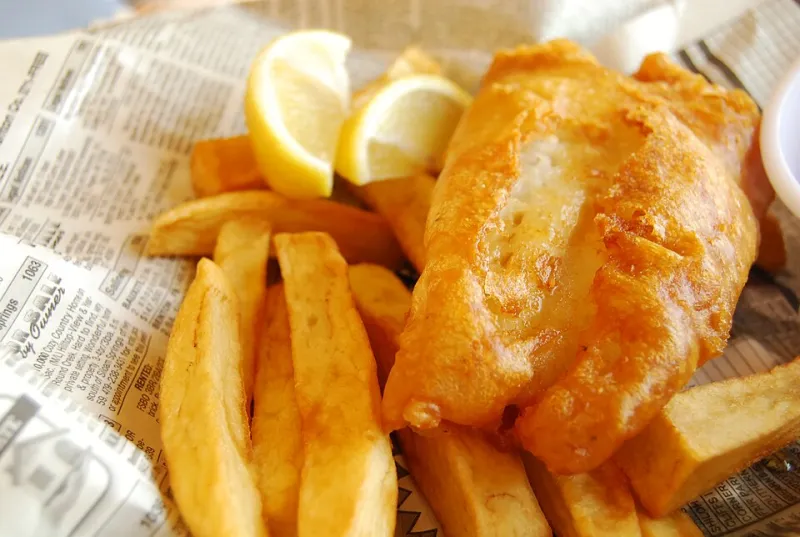
Photo: LearningLark from United States, CC BY 2.0, via Wikimedia Commons
Fish and chips is one of the great British teas, but it is not an easy wine match. The batter is salty and fatty, the vinegar cuts through, and mushy peas bring a sweet, earthy note. A simple unoaked white can work, but it can also taste thin against all that salt and vinegar. The answer is not to reach for the biggest bottle on the shelf. It is to match the chip shop's sharp, salty, fatty trinity with something fresh, modest in alcohol and served properly cold.
Why the chippy tea is a tricky match
The chip shop tea is a texture and acid test. Batter needs freshness to cut through the fat, but too much acidity and the vinegar tastes harsh. Salt makes wine taste softer and fruitier, which is why a bone-dry wine can suddenly seem rounder with a bag of chips. Vinegar, meanwhile, can make a delicate white feel hollow. Mushy peas add a sweet, starchy note that can clash with oaky whites or heavy reds. The goal is not a perfect technical match; it is a bottle that keeps you coming back for another chip.
Start with the usual suspects
Sauvignon Blanc is the obvious choice, but it can be too grassy and pungent with vinegar. Pinot Grigio is often too neutral, and an oaky Chardonnay is the wrong sort of rich. Chablis would be lovely, but a decent one is rarely under £15. The sweet spot is an unoaked white with lemon, green apple and a salty edge. Picpoul de Pinet is the classic chippy white for good reason: it is crisp, light and usually affordable. Albariño can work too, though it is often a bit pricier. If you already have a dry Riesling or a Muscadet in the fridge, try it; just keep it cold and avoid anything off-dry.
The left-field options: rosé, chilled red, cider-style wine
Dry rosé is the most underrated chip-shop pairing. A Garnacha rosado from Spain or a Provence-style blend has enough body to handle batter without tannin getting in the way. Look for words like dry, crisp or pale; avoid white Zinfandel and anything that tastes like strawberry sweets.
A light chilled red sounds wrong until you try it. Beaujolais-Villages or a Loire Gamay, chilled for twenty minutes, has crunchy fruit and very little tannin. It is especially good with battered sausage, curry sauce and pickled onions. Do not use a big Cabernet or Shiraz; the tannin and alcohol will fight the vinegar and leave a bitter edge.
Then there is the bone-dry cider-style wine. Txakoli from the Basque country is the obvious example: lightly spritzy, high in acid, with green apple and a saline finish. It behaves like a dry cider but stays firmly wine. A dry English still white with a green-apple snap can do a similar job. Avoid anything labelled medium, sweet or fruit-forward; sweetness and vinegar are not friends.
Three bottles under £15 to try
-
Picpoul de Pinet, Languedoc. Look for a basic bottling from a good merchant or supermarket. Expect lemon, green apple and a salty finish. Serve it properly cold, not icy. It is the safest all-rounder with cod, haddock and scraps.
-
Dry Garnacha rosado, Spain. A Navarra or Campo de Borja rosado is usually £10 to £14. It should be pale, dry and refreshing, with redcurrant and citrus rather than sweets. It handles salt and batter better than most whites.
-
Beaujolais-Villages. A good basic bottle is often £10 to £14. Chill it for twenty minutes before opening. Look for crunchy red fruit and low tannin. It is the one to open when curry sauce or battered sausage is on the order.
If you want the cider-style experiment, add a Txakoli if you see one under £15. It is not essential, but it is fun with vinegar-heavy chips.
A simple serve-and-order plan
Order one cod or haddock, one battered sausage, mushy peas and curry sauce on the side. Ask for salt and vinegar to taste, and get extra scraps if the shop does them. Put the white and rosé in the fridge two to three hours before tea. Put the red in for the last twenty minutes only. Pour small glasses and keep the bottles in a cooler or a bucket of cold water. Start with the white or rosé, then move to the chilled red as the curry sauce appears. Buy two whites and one red if there are two of you; buy one of each if you want to taste the difference. Total spend can stay under £45, which is about right for a Friday tea that feels a bit more considered than usual.
The lesson is simple: the chippy tea does not need a grand wine. It needs freshness, a light chill and a bottle that does not take itself too seriously. That is a very British sort of match.