The day-after table: wines for ham, chutney and the Tupperware parade
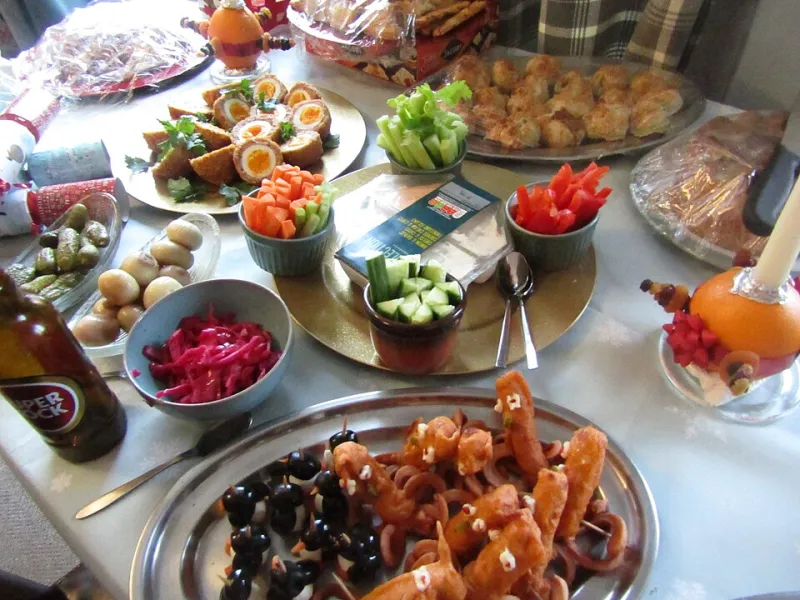
Photo: Kolforn (Kolforn) I'd appreciate if you could mail me ([email protected]) if you want to use this picture out of the Wikimedia project scope. This file is licensed under the Creative Commons Attribution-Share Alike 4.0 International license. Yo
The cold table is a different beast
Christmas dinner is a controlled environment. You know what’s coming, you’ve probably cooked it before, and the wine has one job: get along with roast bird and gravy. Boxing Day is chaos. There’s cold ham, a bit of leftover turkey, three types of pickle, a chutney someone brought, a wedge of cheese that’s been in and out of the fridge, and a Tupperware parade of things that need eating up.
That’s not a pairing problem in the classic sense. It’s a logistics problem. The aim is not to find one perfect wine; it’s to put a few bottles on the table that can handle salt, vinegar, smoke, sweetness and fat without falling apart. Get that right and nobody has to think too hard while they’re building a second sandwich.
The 40/40/20 rule for not overbuying
Most people overshoot on Boxing Day because they buy a bottle for every possible food. Ignore that. Count bottles, not grape varieties.
A sensible starting point is one bottle per two adults, plus one spare in the fridge. Then split the total roughly 40% fizz and crisp white, 40% light red, and 20% off-dry white. That gives you something cold and refreshing for the ham and pickles, something soft and chillable for turkey and cheese, and one slightly sweeter white that can rescue chutney, blue cheese and anything with a bit of heat.
For six adults, that’s three bottles plus a spare: one fizz, one crisp white, one light red, and one off-dry white as the hedge. For eight, add another red and another white. It’s not a formula for a wedding; it’s a formula for avoiding four half-empty bottles and a fridge door that won’t shut.
What makes wine taste wrong on a cold table
Vinegar is the big one. Sharp pickles — onions, gherkins, piccalilli — flatten fruit and can make reds taste oddly metallic. Mustard and horseradish can make oaky wines taste bitter and hollow. Chutney is sweet and spiced, which often makes dry, tannic reds taste mean. Smoked ham plus a big, tannic red can taste like licking an ashtray, and blue cheese plus a hefty Cabernet is a clash of giants.
The fix isn’t to avoid these foods. It’s to keep the wines simple: high acid, low oak, low tannin, and in one case a touch of sweetness. Cold-table food is punchy enough on its own. The wine’s job is to refresh, not compete.
Six bottles that earn their place
1. Dry sparkling — Crémant or Cava
Start here because it works with almost everything. Dry fizz cuts through ham fat, resets the palate after pickles, and makes leftover turkey sandwiches feel like a decision rather than a defeat. A Loire Crémant or a decent Cava is the supermarket shortcut: own-label versions at £9–£12 are usually far better than their price suggests. Serve it properly cold, not just cool.
2. Dry Riesling
This is the sharp-pickle wine. Riesling’s acidity slices through vinegar and salt, and it has enough flavour to stand up to ham without oak getting in the way. Look for “dry” or “trocken” on the label if you want to avoid sweetness. If Riesling feels like a step too far, Picpoul de Pinet or Albariño will do a similar job with less aromatic drama. Keep a bottle in the fridge door for the pickled onion moment.
3. Off-dry Chenin Blanc or Vouvray
This is the bottle people ignore and then finish. A touch of sweetness handles chutney, blue cheese and spicy leftovers without turning into dessert wine. It’s also excellent with cold ham that’s been glazed with something sticky. You don’t need an expensive Vouvray; a basic off-dry Chenin from a supermarket or online mixed case at £9–£14 is plenty. Serve it chilled but not icy.
4. Gamay or Beaujolais
Light red, low tannin, happy with a light chill. This is the red for people who say they don’t like red wine with cold food. It works with ham, turkey, stuffing and soft cheese, and it won’t turn bitter when someone puts a gherkin next to it. A basic Beaujolais-Villages or a Loire Gamay at £8–£13 is the sweet spot. Put it in the fridge for 20 minutes before serving.
5. Pinot Noir
For the leftover turkey plate with stuffing and a bit of cranberry sauce, Pinot Noir is the safe pair of hands. It’s soft enough not to fight the food, but it has more savoury depth than Gamay. Avoid the cheap, sweetish versions and look for something with “Bourgogne” on the label or a cool-climate New Zealand Pinot at £10–£15. It’s also the best red for a cheese board that includes soft, bloomy rinds.
6. Dry sherry — fino or amontillado
This is the wildcard, and it’s brilliant with cold ham, olives, salted nuts and hard cheese. Fino is bone-dry and saline; amontillado has a bit more nutty depth. Serve it cold from the fridge in a small wine glass, not a thimble. A supermarket own-label fino at £7–£9 is one of the best-value food wines in the country, full stop.
The fridge-door shortcuts worth keeping
You don’t need a cellar for Boxing Day. You need two bottles that are already cold and flexible: a dry sparkling wine and a dry white with good acidity. Keep them in the fridge door, not the back of the cupboard. If you’re ordering online, build a mixed case around those two styles and add a light red and an off-dry white. That’s the whole shopping list.
Avoid the temptation to drag out the half-empty Prosecco from Christmas Eve or the heavy red that didn’t get opened. Boxing Day food is salty, sharp and varied; heavy, sweet or oaky wines will feel like hard work. Fresh, lively and simple is the mood.
The cold table doesn’t need a perfect pairing. It needs a few bottles that can take a bit of punishment and keep everyone happy while the leftovers disappear.