Forgotten Bottles, Fair Verdicts: A Pre-Christmas Clear-Out for Your Wine Rack
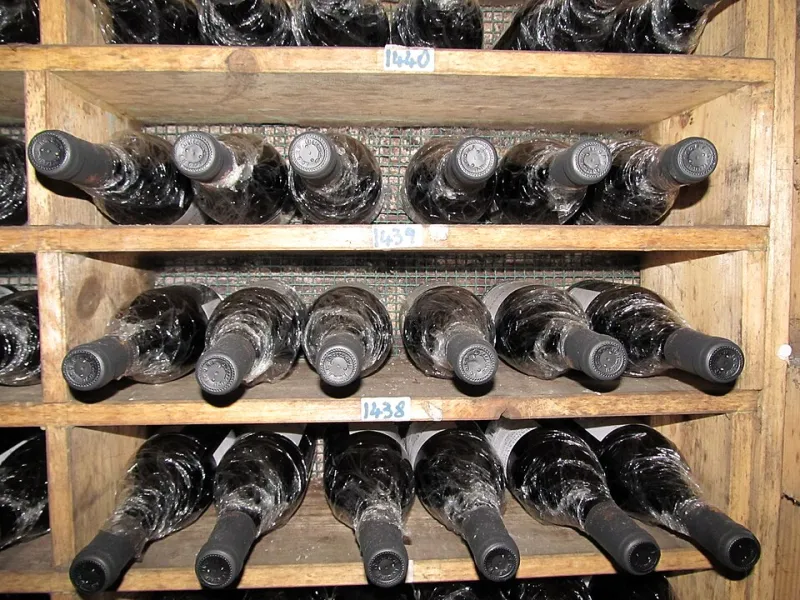
Photo: daryl_mitchell from Saskatoon, Saskatchewan, Canada, CC BY-SA 2.0, via Wikimedia Commons
Every UK kitchen has one: the bottle that arrived as a gift, got pushed behind the flour, and has been quietly waiting ever since. By mid-November 2026, with the Christmas shop about to add another case to the pile, it is worth giving the back of the rack a fair hearing. Not a romantic one. A practical one.
This is not about turning a cupboard into a cellar. It is about making a sensible call before you buy more wine, because the worst outcome is not a slightly tired white. It is buying a fresh case while a perfectly drinkable bottle sulks behind the cereal.
Start with the boring facts
A wine rack is not a cellar. If your bottles have spent the summer next to a radiator, above a washing machine or in a cupboard that gets direct afternoon sun, assume they have aged faster than the label suggests. Heat is the big one. Light matters too, especially for clear glass. Vibration and temperature swings are less dramatic but still unhelpful.
Then look at the closure. A screwcap is a useful clue, not a guarantee. It tends to protect freshness well, but it will not rescue a white that has been cooked for three summers. Natural cork is more variable: a sound cork and a good fill level are encouraging; a cork that has pushed up, seeped or looks damp down the side is a warning. Synthetic corks sit somewhere in between and can be fine, but they are not a time capsule.
Fill level matters most in older bottles. A little ullage in a young screwcapped white is normal. A red with a noticeably low shoulder, sticky residue under the capsule or a cork that has clearly been pushed may have had air and heat doing their worst. You do not need to be forensic about it. You just need to be honest.
Three piles, not a guilt trip
Make three groups on the kitchen table: drink now, cook with it, and keep a bit longer. Add a fourth pile for the recycling bin if the evidence is grim. This is meant to be a clear-out, not a museum curation project.
Drink now is for most forgotten whites, rosés and lighter reds. A dry white from a previous Christmas, a rosé that has lost its blush, a soft red with a screwcap and no great ambitions: chill them properly and taste. If they are sound but simple, serve them with supper rather than saving them for a special occasion that will never arrive. A tired white can still be pleasant very cold with salty snacks; a fading red can be fine with a midweek pasta.
Cook with it is for bottles that are sound but past their best. An oxidised dry white — think bruised apple and a sherry-like edge — can still go into a leek risotto or a chicken traybake, provided it does not taste actively foul. A red with fading fruit but no vinegar sharpness can deglaze a beef ragu. The old rule about not cooking with wine you would not drink is a decent starting point, but it is not absolute: a merely tired wine can still add something. A vinegary or corked wine cannot. More on that below.
Keep a bit longer is the smallest pile. Structured reds, sweet wines, fortified wines and high-acid whites have the best chance of improving or at least holding. But keep means months, not decades. If a bottle is already old, low in fill and stored in a warm kitchen, keeping it longer is usually just delaying the decision.
Read the bottle, not the fantasy
Style and vintage are your best clues. A 2023 Provence rosé discovered in 2026 is a drink-now candidate, not a cellaring project. A young supermarket Pinot Noir is unlikely to have improved by being forgotten. A modest Bordeaux or a structured Rhône might have more room to run, but only if the storage has been kind.
Sweet wines are the quiet survivors. A half-bottle of Sauternes or a German Riesling with residual sugar can hold up surprisingly well after opening, especially in the fridge. Fortified wines are tougher still. A tawny port or a dry amontillado can sit for weeks without falling apart, which makes them useful for the festive season even if they were not bought for it.
Sparkling wine is its own small heartbreak. A forgotten fizz will not improve, and the pressure makes closure problems more obvious. If it is flat but clean, use it in a spritz or a pan sauce. If it smells of wet cardboard, let it go.
Pairings for the awkward middle ground
Some bottles are neither triumph nor disaster. They are just awkward. A white that is slightly too sweet for your taste can work with salty cheese or a ham sandwich. A big, tannic red with fading fruit is better with slow-cooked beef shin than with a delicate roast. An oxidised dry white can go into a braised chicken dish with fennel and cream, where its nutty edge reads as character rather than fault.
For a red that is just past its best, think sauce rather than glass. A long-cooked ragu, a mushroom and lentil bake or a beef and ale pie can absorb a lot of faded fruit. For an odd sweet wine, blue cheese is the easy win; mince pies and Christmas pudding are the seasonal ones. A leftover fortified wine can be used in gravy, poured over vanilla ice cream or simply served in small glasses with nuts before dinner.
A few honest rules
Corked is corked. If a wine smells of damp cardboard or musty cellar, do not cook with it. The taint does not disappear in a pan.
Oxidised is not automatically faulty. A dry white that smells of sherry and apple peel is past it as a drink, but it may still be useful in the kitchen if it tastes clean and sharp rather than sour and dirty.
Vinegar belongs on chips, not in your dinner. If a wine smells sharply of vinegar or nail varnish, bin it. Do not try to rescue it.
Mould under the capsule is not always a disaster, especially on older bottles, but seepage plus low fill plus a musty smell is a clear no. Trust the whole picture, not one clue.
Do not force a forgotten bottle into Christmas Day. If you are unsure, open it on a normal Tuesday with a backup bottle nearby. That way a disappointment costs you a glass, not the main event.
Finally, let the clear-out inform the next online order. If the back of the rack is full of hopeful whites you never drink, buy fewer of them and more of what actually disappears from the fridge. The best wine storage plan is not a bigger rack. It is a smaller, better-edited one that you actually use.