Under the Lid: A Wine Map for the Great British Pie
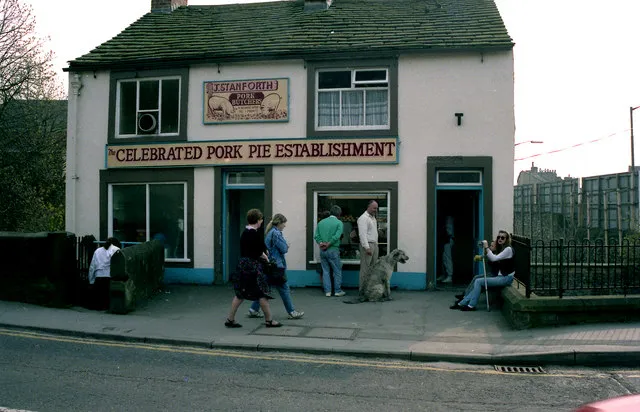
Photo: Dr Neil Clifton, CC BY-SA 2.0, via Wikimedia Commons
The pie is a more demanding dinner guest than it looks. Pastry, gravy, salt and a hot filling all arrive at once, and a wine that sings with a plain roast can suddenly taste thin, bitter or just plain wrong next to a lattice lid. Get it right, though, and there's not much better on a wet Tuesday in November.
What pastry actually does to your palate
Two things matter more than the filling's name on the label: fat and salt.
Fat — and shortcrust, puff and hot-water crust are all generous with it — coats the mouth and dulls your perception of acidity. A wine that felt brisk on its own can seem limp alongside a buttery lid, while something with real zip suddenly tastes round and generous. That's why the old line about acidity cutting through richness holds up so well; the pie does half the work for you, provided the bottle has something to cut with.
Salt is the other lever. Salt in the pastry, salt in the gravy, salt in the cheese — it softens astringency and makes wine taste fruitier and less tart. Which is great news for anyone who likes a bit of grip, and slightly dangerous if you've bought something flabby, because there's nothing left to prop it up.
And gravy? Think of it as a second ingredient. A long, dark, stock-heavy gravy pulls a wine in a savoury direction; a creamy one pushes it towards texture and freshness. Read the sauce before you read the meat.
Steak and ale: your biggest red is probably the wrong call
The instinct is to reach for the heaviest, tannic-est thing in the rack. Resist it. Ale brings malt sweetness and a bitter hop edge, and a chunky oaked Cabernet will fight that bitterness rather than settle it.
Go for structure without oak bluster. A Loire Cabernet Franc from Saumur-Champigny has the leafy, savoury edge that loves dark gravy and doesn't mind a bit of char. A Douro red or a Côtes du Rhône Villages gives you weight and pepper at £10–13 without the furniture polish. If you want one bottle to do steak-and-ale and cottage pie both, that's your pick.
Chicken and mushroom: freshness beats oak
Puff pastry, cream, thyme, mushrooms — this is a subtler pie and it punishes a clumsy wine. Creamy sauces generally want acidity; mushrooms generally want something earthy and a little savoury.
A Mâcon-Villages or a modest white Burgundy is the safe pair of hands. Chenin Blanc — Vouvray sec, or a good South African example for a tenner — is the more interesting answer, all quince and wet stone, and it flatters the mushroom rather than shouting over it. Skip the heavily oaked Chardonnay; the butter and vanilla will land on top of the cream and stay there.
Cheese and onion: the salt problem, solved
Salty, savoury, often with potato in the mix, and usually the cheapest pie on the shelf. This is where an off-dry white earns its keep — a touch of sweetness against salt is one of the most reliable pairings in all of food and wine.
A German Riesling at Kabinett level (£10–13) is the textbook move: lime, slate, a whisper of sugar, and enough acid to stop it cloying. A demi-sec Chenin or an English white with a few grams of residual sugar will do similar work. If you want to be clever, a dry amontillado sherry alongside a warm cheese-and-onion pie is a genuinely lovely thing — though it's a harder sell at a family tea.
The cold pork pie: a different animal altogether
No gravy, no heat, and a set jelly that's salty, peppery and rich. Serving temperature matters as much as the grape here — anything heavy will feel like a coat you can't take off.
Chill a Beaujolais-Villages for twenty minutes and you have the ideal lunch companion: juicy, low in tannin, faintly earthy. A dry Provençal rosé works too, as does a basic crémant if there's an occasion attached. The rule is lightness and a bit of chill — think 12–14°C for the red, properly cold for the pink.
Two quick footnotes: fish pie and cottage pie
Not every pie is a pastry pie, but the logic carries. Fish pie is creamy and delicate, so Picpoul de Pinet or Muscadet — both often under £11 — gives you the lemon-and-salt cut it needs. Cottage pie is savoury and tomato-ish, and a juicy, unoaked Mencía or a young Côtes du Rhône will handle the mince and Worcestershire without turning austere.
The one rule for a mixed half-dozen
Buy by weight and gravy, not by meat. If you're ordering online for a household that eats pie fairly often, assemble a case along these lines:
- Two crisp whites — Picpoul de Pinet, Muscadet, Chablis-adjacent Chardonnay. Fish pie, chicken pie, anything creamy.
- One textured or off-dry white — Chenin Blanc or Kabinett Riesling. Cheese and onion, cold pork pie, and any leftovers on Sunday.
- Two mid-weight reds — Beaujolais-Villages and a Cabernet Franc. Pork pie, chicken, steak and ale in a supporting role.
- One richer red — Douro, Côtes du Rhône Villages, or a Portuguese blend. Steak and ale, cottage pie, a cold night.
That's roughly £65–70 at most online merchants, and it will see you through a month of pastry without a single dud bottle.
Ordering without overthinking it
Most UK online retailers let you build a mixed case — Majestic's mix-six, Waitrose Cellar, Laithwaites, Naked Wines, The Wine Society all do it, and a six usually gets you over a free-delivery threshold, which quietly makes the per-bottle maths better. Check the delivery charge before you check the discount; a saving of £8 means nothing if the courier eats £7.95 of it.
Finally, serve the reds cooler than you think — 14–16°C, which in a UK kitchen in November means fifteen minutes out of the cupboard, not an hour by the radiator. Pies are forgiving food. The wine just needs enough acidity to cut the fat and enough modesty not to argue with the gravy.