Three litres, four weeks, one cupboard: the case for boxed wine in a small kitchen
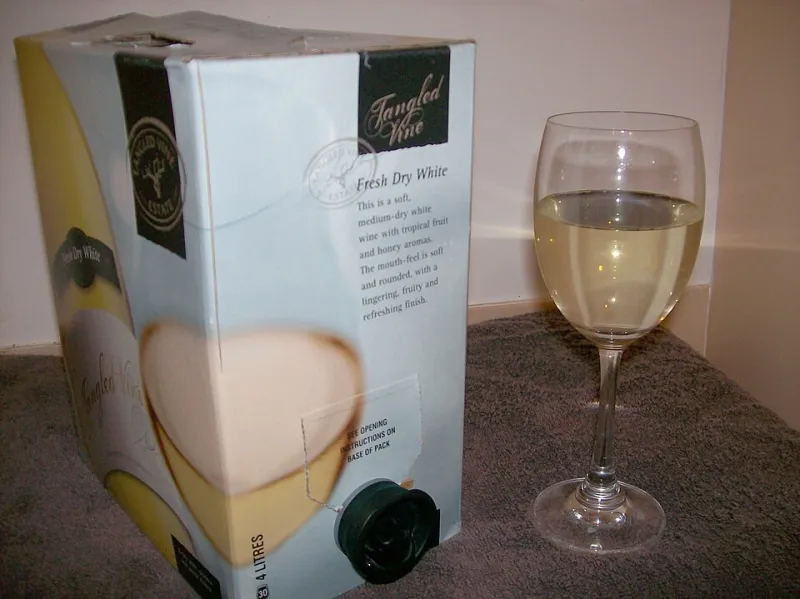
Photo: MichaelGG at English Wikipedia, Public domain, via Wikimedia Commons
There is a particular kind of UK kitchen where the wine rack has been quietly evicted. It is the flat with one good cupboard, the terrace house where the fridge door is already a game of Tetris, the rental where nobody wants to drill a rack into a wall they do not own. Into that space, slightly sheepishly, comes the bag-in-box.
For years the box carried a reputation it half deserved. Thin, sweetish, vaguely petrol-flavoured liquids aimed at festivals and pub cellars. That has changed. If you have not looked at the boxed shelf — or, more accurately, the boxed section of an online merchant — since the last time you went camping, you are in for a pleasant surprise in 2026.
Why the box makes sense now
A standard box holds three litres, which is four bottles. Open a bottle and you have a day or two, maybe three, before the air wins. Open a box and the liner collapses as you pour, keeping the wine away from oxygen, so you get roughly four to six weeks of decent drinking from the moment you break the seal. For anyone who fancies a glass on a Tuesday and does not finish a bottle, that is the whole argument in a sentence.
There is a practical side too. Boxes stack, they do not clink, and a three-litre box takes up about as much cupboard room as a large cereal packet. They are also markedly lighter to ship, which is part of why online merchants have leaned into them — a box travelling to your door carries far less glass and water weight than four bottles would.
Which styles actually hold up
This is where most buying mistakes happen. The liner protects wine from oxygen, but it cannot rescue a fragile style. Buy for the box, not against it.
Reliable: crisp, unoaked whites — Picpoul, Vermentino, Sauvignon from a warm vintage, dry Riesling, southern French whites. Also rosé from Provence or the Languedoc, provided it is young and fresh. Juicy, fruity reds work well: Côtes du Rhône, Malbec, unoaked Tempranillo, inexpensive Shiraz. A modest Prosecco in a box exists and is fine for spritz duty.
Risky: anything delicate or age-worthy. Serious white Burgundy, fine Barolo, vintage Champagne, anything you would want to taste in a big glass and think about. The box format is a midweek tool, not a cellar.
Avoid: very cheap sweetish whites with no grape or region on the box, and anything where the only clue is the words 'medium dry'. That is not a style choice; it is a warning.
What to check before you tap buy
A few things separate a box worth £30 from one that should stay on the virtual shelf.
- Grape and region named. If a box cannot tell you what is in it and roughly where it came from, that is a red flag. It costs nothing to print 'Côtes de Gascogne' or 'Western Cape'.
- Vintage. A decent box will carry one. Non-vintage is acceptable for everyday quaffing but tells you less about what you are getting.
- ABV listed clearly. Boxed wines used to hover around 11%. Many now sit at a normal 12.5% to 13.5%, which is a good sign the wine has not been stretched.
- The tap and the liner. Good merchants describe the tap, and better boxes use a decent one that does not dribble. If reviews mention leaky taps, believe them.
- Price per bottle. Divide by four. A £32 box is £8 a bottle. Compare that to what £8 actually buys you on a supermarket shelf, which in 2026 is not much.
Where the value really sits
The honest answer is: the middle of the range. Very cheap boxes, say £18 to £22, are roughly equivalent to a £5 bottle — fine for a big Sunday lunch with a crowd, not something to savour. The sweet spot sits around £28 to £40 for three litres, where you are effectively buying at the level of an £8 to £11 bottle. That is where boxed wine starts to genuinely compete rather than just economise.
At the top end, £45 and up, you are paying for quality wine in an awkward format. It can be excellent, but you have to really want the box. Unless cupboard space or the midweek-glass problem is driving the decision, the bottle usually wins at that price.
Storing and serving without a wine fridge
You do not need one. You need a cupboard and a jug.
Keep the box somewhere cool and dark — a lower kitchen cupboard, a hallway floor, the spot under the stairs where the hoover lives. Heat is the enemy; a box sitting next to the oven will fade faster than a bottle would. Once opened, it will keep for a month easily, longer for robust reds. Write the date on the box with a marker if you are the sort of person who forgets.
For reds, pour straight from the tap and let it breathe in the glass for a minute. For whites and rosé, the box almost certainly will not fit in your fridge door, and the main body of the fridge is precious real estate. The trick is to fill a clean empty bottle or a small jug with what you plan to drink, chill that, and leave the box in the cupboard. Yes, you are decanting into a bottle to get back to where you started — but you are only doing it once or twice a week, and the box stays out of the way.
Serve whites a touch less cold than you would a bottle from the fridge. A bag-in-box white straight from a cold cupboard is often closer to the right temperature than one that has spent a week at 4°C.
The Sunday lunch test
Where the box genuinely shines is the long, slow meal. A roast chicken, a lamb shoulder, a lasagne for six — the sort of lunch where one bottle disappears before the potatoes are done and the second is opened with a slightly guilty look. A box handles that without ceremony. Two glasses on Friday, a top-up on Sunday, another on Wednesday, and it is still fresh.
If you have been treating boxed wine as something for other people, give the middle tier a proper look this autumn. Buy one box, keep it in the cupboard, and see how often you reach for it. Most kitchens find room for a second.
The short version
Spend £28 to £40, buy from a merchant that names the grape, region and vintage, stick to crisp whites, young rosé and juicy reds, and keep the box cool rather than cold. Do that and the box stops being a compromise and starts being the most-used wine in the house.